
How Stainless Steel Chequered Sheets Are Manufactured?
Table of Contents
- What Is a Stainless Steel Chequered Sheet?
- Raw Materials Used in Manufacturing SS Chequered Sheets
- Step-by-Step Manufacturing Process of Stainless Steel Chequered Sheets
- Grades and Specifications of SS Chequered Sheets
- Surface Finishing and Quality Testing Process
- Applications and Industries That Use Chequered Sheets
- How to Choose the Right Stainless Steel Chequered Sheet for Your Project
- FAQs
1. What Is a Stainless Steel Chequered Sheet?
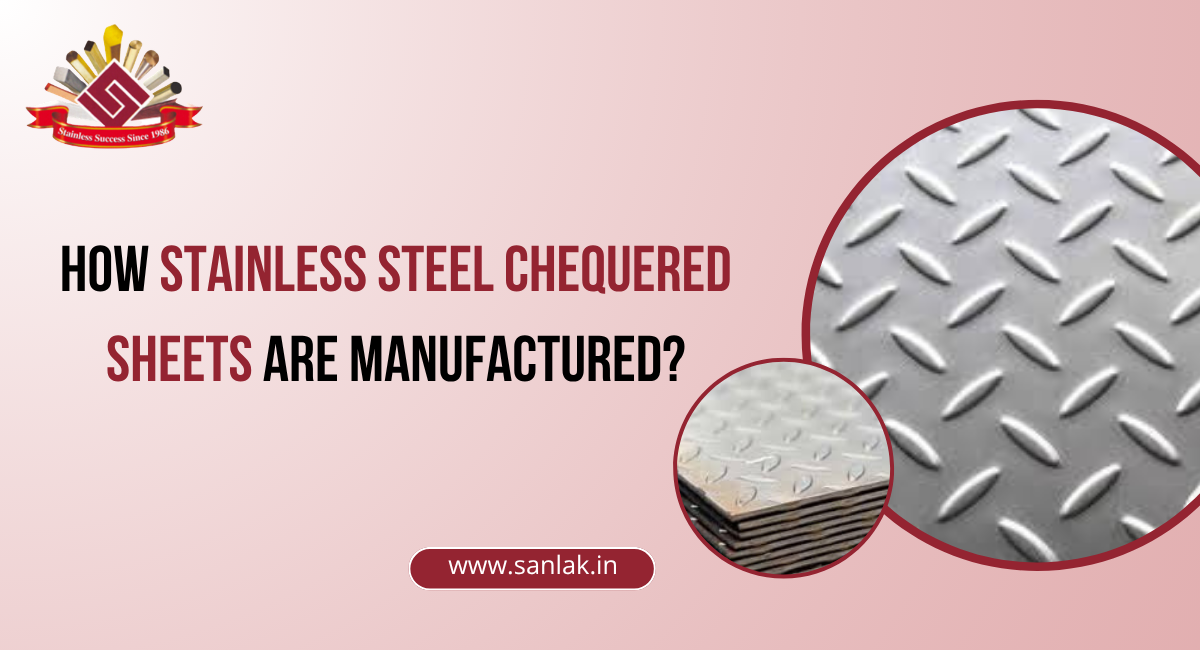
If you have ever walked on a factory floor, a staircase, or a commercial kitchen floor and noticed a raised diamond or lentil pattern on the metal surface, that is a stainless steel chequered sheet doing its job.
A stainless steel checker plate is a flat metal sheet with a raised, patterned surface embossed onto one side. The pattern is not just for looks. It serves a very real, very practical purpose: grip and safety.
Here is what makes it different from a regular flat sheet:
- The raised pattern provides traction underfoot, even in wet or oily conditions
- It is made from stainless steel, so it resists rust, corrosion, and staining
- It is strong enough to handle heavy foot traffic, vehicle weight, and industrial loads
- It is also called an anti-slip stainless steel sheet, chequered plate, or tread plate
Simply put, it is a sheet that works hard, looks clean, and lasts long.
2. Raw Materials Used in Manufacturing SS Chequered Sheets
Good quality starts with good raw material. The manufacturing of stainless steel chequered sheets begins with carefully selected inputs.
The key raw materials used are:
- Stainless steel slabs or billets - These are the base forms of steel that come from steel mills. The grade of the slab determines the final product's quality.
- Alloying elements - Chromium (minimum 10.5%), Nickel, Molybdenum, and Carbon are added in specific proportions depending on the grade required (SS 202, SS 304, SS 316).
- Chromium is especially important - it is what gives stainless steel its corrosion resistance.
- Recycled scrap steel - Many manufacturers use a portion of recycled stainless steel to reduce cost and environmental impact.
The quality and proportion of these raw materials directly impact the durability, finish, and performance of the final sheet.
3. Step-by-Step Manufacturing Process of Stainless Steel Chequered Sheets
The stainless steel chequered sheet manufacturing process involves several well-defined stages. Here is a simple breakdown of how it works:
Step 1 - Melting Raw materials and alloys are melted together in an electric arc furnace at very high temperatures. This forms liquid steel.
Step 2 - Refining The molten steel is refined to remove impurities and achieve the correct chemical composition. This step ensures the material meets grade standards.
Step 3 - Casting The refined liquid steel is cast into thick slabs through a continuous casting process. These slabs are the starting point for rolling.
Step 4 - Hot Rolling The slabs are heated and passed through heavy rolling mills that press them into thinner sheets. This is also where the embossed stainless steel sheet pattern is created — special embossing rolls with the raised design press the chequered pattern onto the sheet surface during this stage.
Step 5 - Annealing After hot rolling, the sheets go through an annealing furnace. This heat treatment relieves internal stress and improves the sheet's ductility and softness.
Step 6 - Pickling The sheets are treated with an acid bath (usually nitric and hydrofluoric acid) to remove scale and oxide layers formed during rolling. This restores the clean, bright surface of stainless steel.
Step 7 - Cutting and Slitting The large coils or sheets are cut to standard or customer-specified dimensions.
Step 8 - Inspection and Dispatch Each sheet is inspected for dimensional accuracy, surface quality, and pattern consistency before packing and dispatch.
4. Grades and Specifications of SS Chequered Sheets
Not all chequered sheets are the same. The grade you choose depends on where and how you plan to use it.
| Grade | Chromium % | Nickel % | Best Use |
| SS 202 | 17–19% | 4–6% | Indoor, general-purpose, budget-friendly |
| SS 304 | 18–20% | 8–10.5% | Food industry, kitchens, light outdoor |
| SS 316 | 16–18% | 10–14% | Marine, chemical, heavy outdoor exposure |
Common Specifications:
- Thickness: 2mm, 3mm, 4mm, 5mm, 6mm, 8mm, 10mm
- Width: 1000mm, 1219mm, 1500mm, 2000mm
- Length: 2000mm, 2438mm, 3000mm, 6000mm, or custom
- Pattern Types: Diamond, teardrop, lentil, 5-bar
As a leading stainless steel chequered sheet manufacturer in India, Sanlak offers all major grades and custom dimensions to suit your project requirements.
5. Surface Finishing and Quality Testing Process
Once the chequered sheet is rolled and pickled, it goes through final finishing and strict quality checks.
Surface Finishing Options:
- 2B Finish - Standard, smooth matte finish after cold rolling and light rolling
- No. 1 Finish - Hot rolled, annealed, and pickled surface; used for industrial chequered sheets
- Brushed/Satin Finish - For decorative applications
Quality Testing Includes:
- Dimensional inspection (thickness, width, length)
- Visual check for surface defects, scratches, or uneven patterns
- Hardness and tensile strength testing
- Corrosion resistance check
- Chemical composition verification using spectroscopy
Every sheet that leaves Sanlak's facility goes through this quality protocol to ensure it meets IS, ASTM, and EN standards
.
6. Applications and Industries That Use Chequered Sheets?
The anti-slip stainless steel sheet is used across a wide range of industries. Here are the most common ones:
- Construction - Stair treads, walkways, ramps, and mezzanine flooring
- Food & Beverage - Kitchen floors, food processing units, cold storage rooms
- Automotive - Vehicle flooring, truck beds, footrests
- Marine & Offshore - Ship decks, dock platforms, offshore walkways
- Industrial Plants - Factory floors, machine platforms, access walkways
- Public Infrastructure - Bus station floors, airport walkways, railway platforms
- Petrochemical - Refineries, pipelines, and plant flooring where chemical exposure is common
Anywhere safety, hygiene, and durability matter - the stainless steel checker plate is the go-to solution.
Once you know the right application, the next step is knowing how to work with the material, read our full guide on how to use stainless steel sheets for better projects for practical tips and best practices.
7. How to Choose the Right Stainless Steel Chequered Sheet for Your Project?
Choosing the right sheet does not have to be complicated. Keep these points in mind:
- Grade first - If it is indoors, SS 202 or SS 304 works well. If it is near the sea, chemicals, or extreme weather, go for SS 316.
- Thickness next - Light foot traffic needs 2–3mm. Heavy machinery or vehicles need 5mm or above.
- Pattern type - Diamond patterns offer the best grip for most applications.
- Size and cutting - Always check if the manufacturer offers custom cutting. This saves waste and cost.
- Certifications - Make sure the sheet comes with a mill test certificate (MTC) confirming grade and composition.
When in doubt, talk to a trusted stainless steel chequered sheet manufacturer in India like Santhana Lakshmi Metals, who can guide you based on your exact use case, load requirements, and budget.
To make the best buying decision, it helps to know who the reliable suppliers are — here is our curated list of the top stainless steel sheet manufacturers in India that you can trust for quality and consistency.
FAQs:
1. What is the difference between a chequered sheet and a flat sheet?
A chequered sheet has a raised pattern on the surface for grip and anti-slip safety, while a flat sheet has a smooth surface. Chequered sheets are used where traction is important.
2. Is a stainless steel chequered sheet rust-proof?
Yes. Because it is made from stainless steel (which contains chromium), it resists rust and corrosion naturally. Higher grades like SS 316 offer even better resistance in harsh environments.
3. What thickness of chequered sheet should I choose for a staircase?
For staircases with regular foot traffic, a 3mm to 4mm thickness is ideal. For industrial or heavy-duty staircases, 5mm or above is recommended.
4. Can the chequered pattern wear off over time?
No. The chequered pattern is embossed directly into the steel during the hot rolling process. It is a permanent part of the sheet surface and does not peel, wear, or fade.
5. How do I get a custom-sized chequered sheet?
Most reputed manufacturers, including Sanlak, offer custom cutting and sizing services. You simply need to share your required dimensions, grade, and quantity, and they will fabricate it accordingly.
Conclusion:
Stainless steel chequered sheets are more than just a metal surface, they are a smart combination of strength, safety, and durability built through a precise manufacturing process. From raw material selection to hot rolling, annealing, and quality testing, every step matters. Whether you need an anti-slip floor for a factory, a staircase tread, or a commercial kitchen surface, choosing the right grade and thickness makes all the difference. At Sanlak, we manufacture every sheet to meet the highest quality standards. Contact us today to get the best stainless steel chequered sheets delivered anywhere across India.