
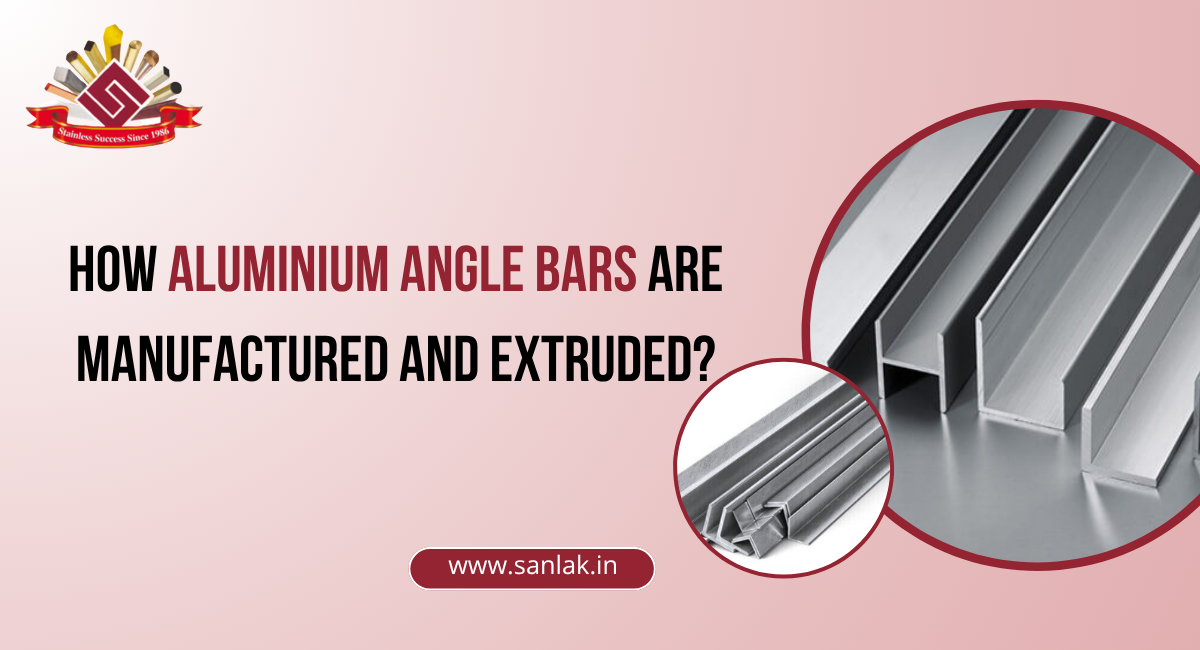
How Aluminium Angle Bars Are Manufactured and Extruded?
Aluminium angle bars are everywhere, from construction frames to industrial machinery. But have you ever wondered how they're actually made? The process behind aluminium angle bar production is a blend of precision engineering, heat science, and smart material choices. In this guide, we at Santhana Lakshmi Metals walk you through the entire journey, from raw billet to the finished extruded aluminium profile sitting on your worksite.
Table of Contents
- What Are Aluminium Angle Bars and Why Are They Used?
- Raw Materials Used in Aluminium Angle Bar Manufacturing
- The Step-by-Step Aluminium Extrusion Process Explained
- Die Design and Its Role in Shaping Angle Bars
- Heat Treatment and Cooling – Why It Matters for Strength
- Surface Finishing Options – Anodizing, Powder Coating & More
- Quality Control and Tolerance Standards in Angle Bar Production
- FAQs
- Conclusion
1. What Are Aluminium Angle Bars and Why Are They Used?
Aluminium angle bars are L-shaped metal profiles with two legs meeting at a 90-degree angle. They are one of the most widely used structural components across industries.
Common applications include:
- Building frames and support structures
- Machine enclosures and industrial equipment
- Shelving, racking, and storage systems
- Electrical panel frameworks
- Automotive and aerospace assemblies
Their popularity comes down to a simple combination: lightweight, strong, corrosion-resistant, and easy to fabricate. As a trusted Aluminium Angle Bars Supplier in India, Sanlak Metals supplies these profiles for both standard and custom industrial requirements.
2. Raw Materials Used in Aluminium Angle Bar Manufacturing
The quality of any extruded aluminium profile starts with the raw material. Here's what goes into it:
- Aluminium Billets - Cylindrical logs of pure or alloyed aluminium are the starting point. These are pre-cut to specific lengths before processing.
- Alloy Selection - The two most common grades used in angle bar production are:
- 6061 Aluminium - Higher strength, ideal for structural and load-bearing use
- 6063 Aluminium – Smoother surface finish, preferred for architectural and visible applications
- Alloying Elements - Magnesium and silicon are added to improve mechanical strength, machinability, and corrosion resistance.
Choosing the right alloy grade is the first critical decision in how aluminium angle bars are made, and it directly affects the final product's performance.
The choice of alloy grade often depends on the industry it's being used in, see how different sectors use angle bars in our guide on “The Practical Role of Aluminium Angle Bars Across Industries”.
3. The Step-by-Step Aluminium Extrusion Process Explained
This is the heart of aluminium angle bar production. The aluminium extrusion process shapes the raw billet into the precise L-shaped profile you use on-site.
Here's how it works, step by step:
- Billet Heating - The aluminium billet is heated to around 400–500°C. At this temperature, it becomes soft and workable but does not melt.
- Transfer to Press - The heated billet is loaded into an extrusion press, a powerful hydraulic machine.
- Ram Pressure Applied - A ram pushes the softened billet forward with enormous pressure (ranging from 100 to 15,000 tonnes depending on profile complexity).
- Extrusion Through the Die - The aluminium is forced through a precision-machined steel die shaped like the angle bar's cross-section. The metal flows through and takes the exact L-shape.
- Profile Exit and Stretching - The extruded profile exits the die and is pulled along a cooling table. It is then mechanically stretched to relieve internal stress and correct any bowing.
- Cutting to Length - Once cooled and straightened, the profiles are cut to standard lengths (typically 6 meters) using automatic saws.
- This aluminium extrusion process is what gives angle bars their consistent dimensions and clean surface every single time.
4. Die Design and Its Role in Shaping Angle Bars
The die is the unsung hero of the extrusion process. It's a thick steel disc with a precisely machined opening that mirrors the angle bar's cross-section.
Key points about die design:
- Dies are made from H13 tool steel for heat resistance and long life
- Even a minor error in the die geometry creates dimensional defects across the entire production run
- Flat dies are used for solid profiles like angle bars, simpler but requiring high precision
- Dies are regularly maintained, polished, and reconditioned to maintain profile accuracy
- Custom angle bar sizes require a new die to be machined, this is a one-time tooling cost
At Sanlak Metals, we work with precision-engineered dies to ensure every profile meets tight dimensional tolerances.
5. Heat Treatment and Cooling – Why It Matters for Strength
Raw extruded aluminium is relatively soft. Heat treatment is what gives angle bars their final mechanical strength.
- Quenching - After extrusion, the profile is rapidly cooled using air or water to lock the alloy's structure
- Aging (T5 / T6 Temper) - Profiles are placed in an oven at 160–180°C for several hours. This process (called artificial aging) significantly increases hardness and tensile strength.
- Temper Designation - The final temper (T5, T6) is marked on the product and tells you its strength level.
Without proper heat treatment, angle bars won't perform reliably under structural load, making this step non-negotiable in quality aluminium angle bar production.
6. Surface Finishing Options – Anodizing, Powder Coating & More
Once the angle bar is heat-treated and cut, it can be finished based on the application requirement.
| Finish Type | Best For | Key Benefit |
| Mill Finish | Industrial use | Cost-effective, no coating |
| Anodizing | Architectural & outdoor use | Enhanced corrosion resistance |
| Powder Coating | Decorative applications | Wide colour options, durable |
| Electrophoretic Coating | High-humidity environments | Excellent surface protection |
As a leading Aluminium Angle Bars Supplier in India, Sanlak Metals offers angle bars in mill finish and anodized options to suit diverse project needs.
7. Quality Control and Tolerance Standards in Angle Bar Production
Every batch of extruded aluminium profiles goes through strict quality checks before dispatch.
What's inspected:
- Dimensional accuracy - Leg length, thickness, and angle (must be exactly 90°)
- Surface quality - No scratches, die lines, or pitting
- Mechanical properties - Tensile strength and hardness tested per IS/ASTM standards
- Straightness - Profiles must not bow or twist beyond permissible limits
- Chemical composition - Alloy grade verified through spectrometer analysis
Quality control is what separates a reliable supplier from the rest. At Sanlak Metals, every profile is traceable back to its billet batch for full quality accountability.
8. FAQs:
1. What alloy is most commonly used for aluminium angle bars?
6063 and 6061 are the most used grades. 6063 gives a cleaner finish; 6061 offers higher strength.
2. What is the standard length of an aluminium angle bar?
The standard mill length is 6 metres, though custom cut lengths are available on request.
3. Can aluminium angle bars be welded?
Yes. 6061 and 6063 alloys are both weldable using TIG or MIG welding methods.
4. How long does the aluminium extrusion process take per batch?
A typical production run takes 4–8 hours, including heating, extrusion, aging, and finishing.
5. What is the difference between extruded and fabricated angle bars?
Extruded angle bars are formed in one continuous process, giving uniform strength and surface finish. Fabricated ones are bent or welded, which may introduce weak points.
Conclusion:
Understanding how aluminium angle bars are manufactured helps you make smarter buying decisions. From billet selection to the aluminium extrusion process, every step shapes the final product's quality and performance. Whether you need standard sizes or custom profiles, partnering with the right supplier makes all the difference. Sanlak Metals is committed to delivering precision-extruded aluminium angle bars that meet the highest industry standards, every time, on time.
If you're wondering why aluminium angle bars are the preferred choice for structural projects, read our detailed guide on the “Top Reasons to Use Aluminium Angle Bars in Your Projects”.